

When goods are shipped from one destination to another, they undergo a complex logistical journey involving loading, unloading, storage, and sea or land transport.
Each stage directly affects the condition of the cargo, its ability to withstand changing conditions, and even the safety of the personnel handling it.
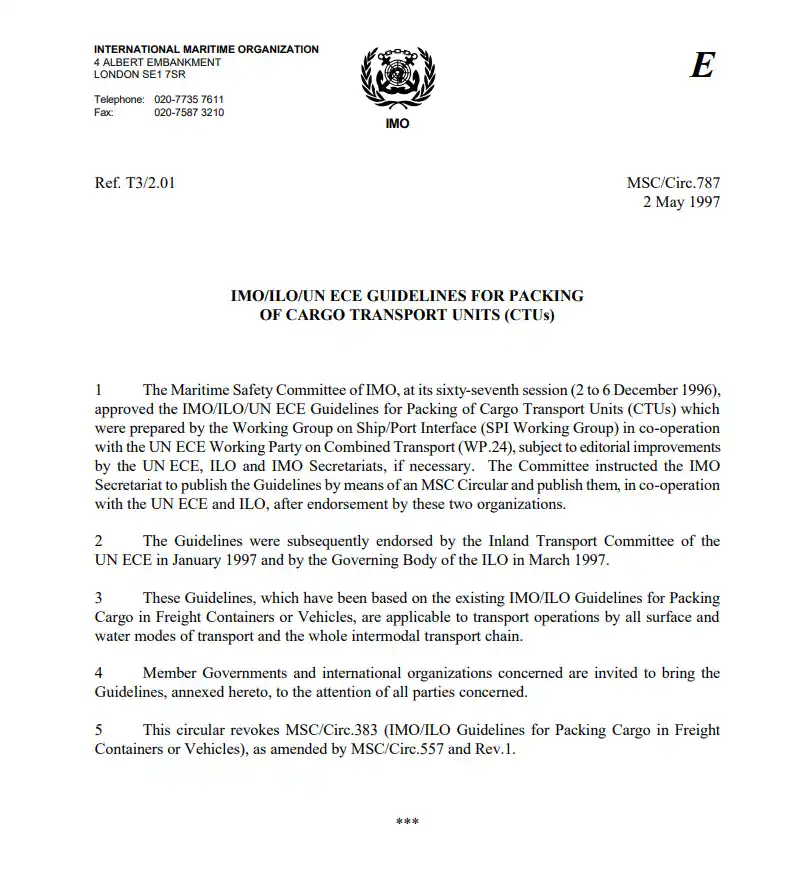
This is precisely why the CTU Code – Code of Practice for Packing of Cargo Transport Units – was developed.
It is an international standard established by the United Nations, the International Labour Organization (ILO), and the International Maritime Organization (IMO).
Its purpose is to set clear and uniform guidelines for packing cargo in containers, pallets, and various transport units, ensuring that goods arrive at their destination safely and undamaged.
In Israel, the CTU Code carries particular significance for importers, freight forwarders, and customs brokers.
It’s not merely a technical guideline but a binding framework that shapes daily operations with suppliers, carriers, and regulatory authorities.
Understanding and implementing the CTU Code provides a real competitive edge – helping reduce risks, cut costs, and streamline the entire import process.
What Does the CTU Code Actually Cover?
The CTU Code is a comprehensive guideline outlining best practices for packing cargo in transport units such as containers, pallets, and other shipping modules.
It covers every stage of the packing process-from selecting packaging materials, arranging cargo inside the unit, to sealing and preparing it for shipment.
The standard provides specific instructions on:
- Weight distribution: Ensuring proper balance within the unit to prevent instability during transport.
- Cargo securing: Preventing movement through lashing, bracing, and cushioning.
- Environmental considerations: Accounting for temperature, humidity, and other conditions that may affect the cargo.
- Marking hazardous or fragile goods: Clear labeling to ensure safe handling.
- Accurate documentation: Precise recording of the unit’s contents.
The CTU Code’s goal is to minimize property damage, prevent life-threatening accidents, and ensure compliance with international regulations.
Proper implementation is not just a quality measure-it’s a logistical necessity that reduces risk and guarantees a smooth, compliant import process.
Differences Between CTU-Compliant Packing and Non-Standard Packing
In many cases, cargo damage isn’t caused by technical failures but by poor or amateurish packing.
The table below highlights the key differences between packing done according to the CTU Code versus non-standard packing:
| Parameter | CTU-Compliant Packing | Non-Standard Packing |
|---|---|---|
| Weight Distribution | Balanced and carefully calculated according to precise guidelines | Random, potentially causing instability |
| Internal Securing | Uses approved straps, barriers, and cushioning materials | Lacking proper securing or using unsuitable methods |
| Documentation & Labeling | Includes accurate cargo description and warning labels | Partial or missing documentation, sometimes unlabeled |
| Workplace Safety | Reduced risk of injury during loading and unloading | Higher risk of falls or cargo shifts |
| Durability During Transit | Designed to withstand temperature, humidity, and movement | Susceptible to damage during transport |
| Regulatory Compliance | Meets international guidelines and accepted by customs | Risk of delays or denied entry |
This comparison clearly illustrates how proper implementation of the CTU Code enhances cargo safety, ensures regulatory compliance, and improves overall service quality.
How to Implement the CTU Code in Practice
Implementing the CTU Code begins at the packaging planning stage.
Before loading cargo into a container, it’s essential to understand its characteristics-weight, volume, packaging type, and sensitivity to environmental conditions. Based on this information, a loading plan is developed to ensure proper weight distribution and secure fastening of every item.
Key actions for applying the CTU Code include:
- Inspecting the transport unit: Check the structure, floor, walls, and doors for integrity.
- Using appropriate securing materials: Straps, air cushions, and braces to safely secure the cargo.
- Maintaining proper documentation: Record the contents of the container thoroughly, including photos and supporting documents.
- Clear labeling: Mark hazardous, fragile, or special cargo according to international requirements.
- Quality control: Conduct inspections before sealing the container for shipment.
In many cases, it’s advisable to involve professionals, especially when handling sensitive or non-standard cargo.
Internal enforcement of CTU-aligned procedures increases supply chain reliability and minimizes risks throughout the entire transport process.
Watch: A short video illustrating the importance of the CTU Code
Legal Responsibility of Importers in Cargo Packing
Although the CTU Code is not legally mandatory in many countries, including Israel, it serves as a widely recognized professional standard that defines the expected responsibility of all parties in the supply chain.
In the event of an accident, damage, or injury linked to improper packing, the CTU Code is often used as a legal reference point to determine liability.
It’s important to note that even if the packing was done abroad, once the cargo falls under the importer’s responsibility-whether during insurance coverage, onward shipping, or unloading-the liability rests with them. Courts and insurance authorities examine whether preventive measures were taken according to accepted procedures and whether the incident could have been anticipated.
This underscores the importance of the CTU Code as a foundation for professional practice-not just to meet industry expectations, but also to reduce legal exposure and provide a strong defense in case of failure.
Importers who systematically implement the CTU standards benefit not only from higher operational safety but also from a solid legal safeguard.
In Summary
The CTU Code is far more than a technical guideline-it defines a professional standard that supports importers in their responsibility to protect cargo integrity and safety.
Adhering to the CTU principles helps safeguard goods while also establishing a smoother, faster, and more cost-effective import process.
This article reviewed the components of the standard, the risks of non-compliance, and the practical differences between professional and amateur packing.
Through deep understanding and systematic application of the CTU guidelines, importers can reduce damage, meet regulatory requirements, and ensure continuous, reliable logistics operations.
For any business involved in imports-large or small-the CTU standards should be considered an integral part of quality and operational management.
Ultimately, proper packing is not just a matter of organization-it’s a matter of responsibility.