
Czechia is establishing itself as one of the most attractive countries for commercial import to Israel.
Located in the heart of Europe, it offers an advanced industrial infrastructure, transparent regulations, a skilled and professional workforce, and strong governmental support for export.
All these factors make it a smart choice for Israeli businesses seeking to import high-quality, reliable products at competitive costs.
The Advantages of Importing from Czechia – More Than Just Geography
Czechia serves as a major logistical hub in Europe, offering convenient access to rail transport, key seaports in Slovenia, Germany, and the Netherlands, and fast movement across open borders.
Thanks to its membership in the European Union, Czechia operates under a unified regulatory framework with strict quality controls – ensuring importers receive high-quality products that meet recognized standards such as CE certification.
One of the most significant advantages is the customs exemption available for products accompanied by an EUR.1 certificate and originating in the EU.
Under the Israel-EU trade agreement, this can save importers thousands of shekels in import costs – provided all required declarations and documents are properly submitted.
Which Products Are Worth Importing from Czechia?
The Czech market offers a wide range of high-quality products across multiple industries:
- Machinery, mechanical parts, and industrial production equipment
- Electronic components, electrical devices, and precision technologies
- Automotive spare parts, especially for European brands
- Glassware, porcelain, lighting, and decorative items
- Natural cosmetics, personal care products, and specialty foods (including beer, cheeses, and preserves)
For businesses seeking unique, high-quality products that aren’t available from the Far East, Czechia is an ideal source – offering reliability, a balance of aesthetics and functionality, and full regulatory compliance with European standards.
How to Find Reliable Suppliers in Czechia
Before making your first purchase, it’s important to invest time in finding the right supplier. You can do this in several ways:
- Use European B2B platforms such as Europages, Kompass, b2bmap, and others.
- Attend professional trade fairs in Czechia, especially in Prague or Brno. You can find upcoming events on the website Trade Fair Dates.
- Seek recommendations from chambers of commerce, Israeli trade representatives, or procurement companies.
Before making any payment or signing a contract, always request official documentation – such as the supplier’s Czech company registration certificate, relevant quality certifications (e.g., ISO), and their EORI number (Economic Operators Registration and Identification).
What Is an EORI Number and Why Is It Critical?
EORI (Economic Operators Registration and Identification) is a business identification number required for any entity involved in exporting or importing goods within or from the European Union.
Every supplier in Czechia must have a valid EORI number – without it, shipments may face serious delays or even be blocked at customs.
The number enables automated identification of transactions by EU customs authorities and ensures that the exporter operates legally.
You can verify the validity of an EORI number through the EU’s official EORI Validation website.
Regulations and Reforms You Should Know
The European Union is implementing reforms to streamline trade processes through digital systems, standardized forms, and integration between customs authorities.
Suppliers in Czechia who already operate under these digital systems can significantly speed up the import process.
However, it’s important to note that Israeli regulations still require specific product certifications in certain categories – such as electricity, electronics, food, cosmetics, and medical equipment.
Before finalizing any deal, make sure to check whether approval from the Standards Institute of Israel or the Ministry of Health is required, as well as the associated costs and clearance timelines at customs.
Business Culture in Czechia: What You Need to Know
Czech business culture places strong emphasis on formality, precision, documentation, and written communication.
While English is commonly used, it’s recommended to involve a translator when needed-especially for contracts or legal documents.
Business negotiations in Czechia often progress more slowly than in Israel, but once trust is established, suppliers tend to show a high level of commitment and reliability.
Therefore, it’s worth investing time in building relationships, setting clear expectations, and ensuring a signed contract with precise definitions.
Importing from Czechia to Israel offers high potential for growth, stability, and reduced supply chain costs.
With proper planning, supplier evaluation, regulatory compliance, and risk management, you can establish a profitable and secure import system for the long term.
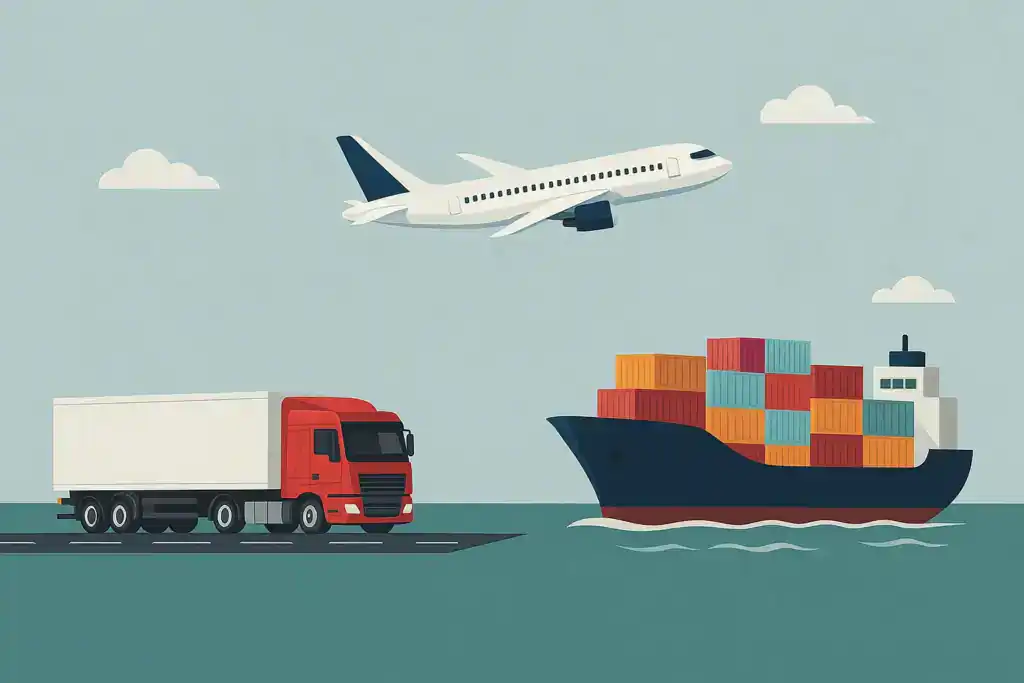
All the Ways to Ship Goods from Czechia to Israel: A Comprehensive Comparison
Choosing the right shipping method directly affects your costs, delivery times, availability, risk level, and even the customs clearance process.
From Czechia, goods can be transported to Israel in three main ways:
- Air freight
- Sea freight
- Land transport combined with European ports
Each option has its own advantages and disadvantages, and the best choice depends on your product type, urgency, budget, and import volume.
Air Freight from Czechia to Israel – Fast but Costly
Air freight is ideal for small, urgent, or sensitive shipments.
It’s the fastest way to bring goods from Czechia, with an average delivery time of 2-5 business days (including customs clearance in Israel, in smooth cases).
Most cargo departs from Prague Airport, connecting through major European hubs such as Frankfurt, Vienna, or Amsterdam, and then continues via direct or connecting flights to Ben Gurion Airport.
Advantages:
- Very fast delivery times
- Better conditions for sensitive goods (e.g., refrigerated items, electronics, documents)
- Simple logistics (no containers, fewer coordination steps)
Disadvantages:
- Very high cost per kilogram, especially above 100 kg
- Size and weight limitations
- Not suitable for bulky or low-value cargo
Air freight is most relevant for medical products, urgent spare parts, samples, luxury goods, or small one-time shipments.
Generally, when shipment weight exceeds around 200 kg, it’s worth considering LCL sea freight (shared container) instead.
Of course, this is not a fixed rule – the most critical factor is always the cargo volume.
Sea Freight: The Reliable and Cost-Effective Option for Medium to Large Shipments
Sea freight is the most common method for commercial imports from Czechia, even though the country itself is landlocked.
Shipments are transported by land from the factory in Czechia to nearby ports-usually Hamburg (Germany), Koper (Slovenia), Rotterdam (Netherlands), or Trieste (Italy)-and from there by ship to Israel.
Main Shipping Methods:
- FCL (Full Container Load): For large-volume shipments that fill an entire container.
- LCL (Less than Container Load): Shared container shipments with other importers, ideal when you don’t have enough volume for a full container.
Advantages:
- Significantly lower cost per weight/volume unit.
- Suitable for heavy, bulky, or high-volume goods.
- Wide range of insurance and risk management options.
Disadvantages:
- Total transit time of 14-28 days (sometimes longer), including land transport, loading, sailing, and unloading. (You can check current sailing schedules on Maersk’s website by entering the origin and destination ports.)
- Dependence on multiple logistical parties.
- Risk of port delays, especially during peak seasons.
Sea freight is especially suitable for regular importers, large-volume shipments, or businesses seeking stable supply chains with strong cost control.
Land Freight: A Cost-Effective Hybrid Solution
Land freight from Czechia to Israel is not a standalone option, but it plays a key role as the first leg of a combined transport route with sea shipping.
The goods are transported by truck from the factory in Czechia to a nearby European port, and from there continue by sea to Israel.
In some cases, rail transport can be used-mainly for complex logistical needs-but it’s more common for intra-European shipments. After the container arrives in Israel, domestic trucking is used to deliver it from the port to the warehouse or final destination.
Advantages:
- Flexibility in choosing the most suitable European port.
- Potential to reduce sea freight costs when using a more affordable nearby port.
- Faster transit from factory to port of departure.
Disadvantages:
- Overland transport costs vary based on distance and brokerage fees.
- Dependence on cross-border logistics and regulations.
- Risk of delays at borders or due to transport permits.
It’s crucial to evaluate the full route, considering total cost, time, and operational control, to determine whether the combined land-sea approach offers real savings.
Multimodal Shipping – When Efficiency Matters
In many cases, combining several shipping methods-
for example, ground transport to a European port, followed by sea freight to Israel-is the most efficient approach.
Many freight companies offer integrated multimodal services that include online tracking, coordination between transit points, and handling of permits and documentation.
This method is ideal for businesses seeking a customized solution that ensures logistical efficiency, minimal risk, and maximum control.
The chosen shipping method will affect the entire supply chain-product availability, pricing, risk of damage or loss, and overall operational costs.
Our recommendation:
Work with an experienced freight forwarder and customs broker, set clear timelines with your suppliers, and carefully evaluate the Total Landing Cost before making a decision.
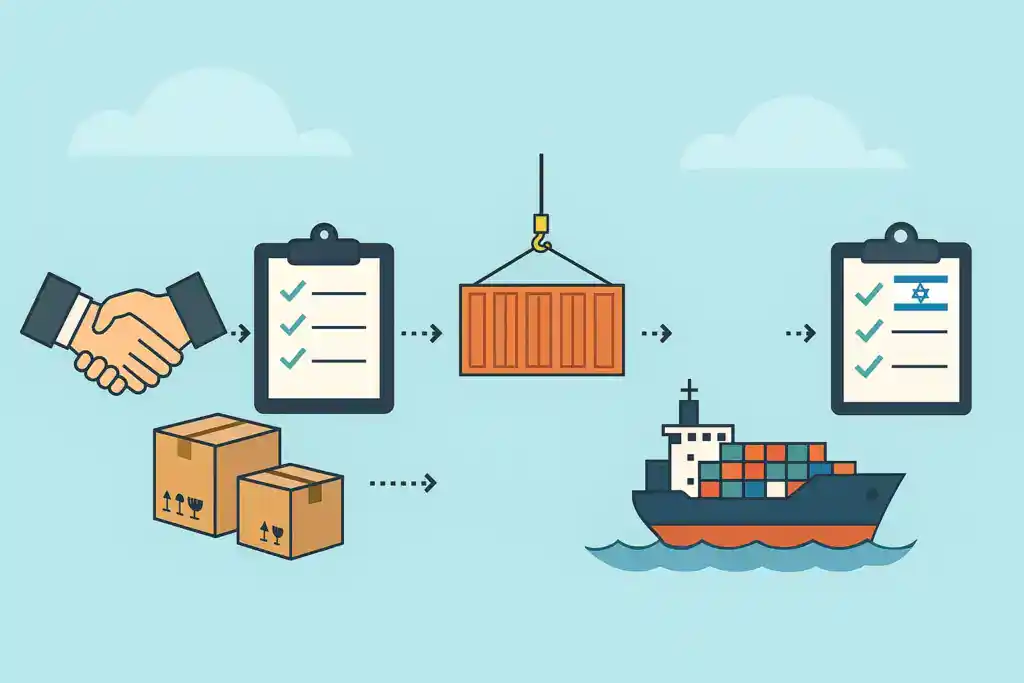
How the Import Process from Czechia to Israel Works: Step by Step
Even when importing from a convenient source like Czechia, it’s important to understand the process thoroughly.
A well-organized, documented, and properly managed import process avoids delays, fines, unexpected costs, and most importantly, frustration.
The process involves multiple stages, including documentation, approvals, coordination, payments, and professional guidance.
Familiarity with these steps in advance allows for efficient planning of timelines, budgeting, and quality control for each shipment.
Opening an Importer File: The First Step
Before starting the actual import process, it is mandatory to open an importer file with the Israeli Tax Authority.
Any individual or business planning to import on a regular basis must submit a formal declaration using Form 815.
The process includes:
- Registration under the “Commercial Import” route with customs.
- Connecting with an authorized customs broker to manage the file.
- Defining business details, scope of activity, and account information for payment purposes.
It’s important to note that even small businesses or self-employed individuals importing for personal business use are required to open a file, even for limited quantities.
Working with a Customs Broker – A Critical Partner for Success
A customs broker accompanies the import process from start to final clearance.
Their role includes:
- Accurate customs classification according to the Israeli Customs Tariff.
- Calculation of taxes, VAT, and possible exemptions (e.g., when an EUR.1 certificate is provided).
- Handling regulatory approvals (Standards Institute, Ministry of Health, Ministry of Agriculture, etc.).
- Submission of the import declaration (a mandatory document containing all shipment details).
- Coordination with the shipping company for customs clearance.
Professional customs brokerage prevents errors that could lead to fines, delays, or unnecessary container demurrage at the port – which can be extremely costly.
Documents You Need to Prepare in Advance
Importing from Czechia requires submitting several documents, which must be accurate and coordinated with all parties involved:
- Original Invoice
Details the supplier, products, quantities, prices, and payment terms. - Packing List
Specifies the contents of each package, weights, and volumes. - Certificate of Origin (EUR.1)
Required to obtain customs exemptions under the EU-Israel trade agreement. - Bill of Lading (B/L) or Air Waybill (AWB)
Depends on the shipping method (sea or air). - Regulatory Approvals / Inspections
Varies by product (e.g., electrical standards, Ministry of Health, food licensing).
These documents must be submitted to the customs broker several days before the shipment arrives in Israel to start the clearance process as early as possible.
Dealing with Testing Institutes and Regulatory Authorities
In many cases, approval from testing institutes and laboratories (such as the Standards Institute of Israel) is required before the goods can be cleared, depending on the product’s customs classification.
For example:
- Electrical products – require periodic or one-time testing.
- Dietary supplements – require approval from the Ministry of Health.
- Children’s toys – subject to specific safety standards.
In some cases, exemption from testing is possible if a valid European certification is provided.
Here again, the customs broker is your point of contact to determine requirements. In most cases, the process can be streamlined by pre-registering with the relevant governmental authority.
Customs Clearance: The Final Step
Once all documents are verified and approvals obtained, the goods are released from customs through the shipping company.
It’s important to ensure that all costs are included, such as VAT, duties, port fees, storage charges, clearance fees, and related logistics services.
From there, the goods are transported by land to the warehouse, store, or factory.
Optional: Land transport insurance can be included if needed.
It’s also wise to confirm whether there is an SLA (Service Level Agreement) between the different partners to ensure full control over the process.
How to Prevent Delays
- Prepare documents in advance, including translations if required.
- Work with a customs broker experienced in your specific industry.
- Submit early requests to the Standards Institute or relevant government authorities.
- Track your shipment daily through the shipping system.
- Maintain direct communication with the supplier in Czechia to monitor departure dates, documentation, and potential bottlenecks.
Professional importing starts at the contract stage with the supplier, clearly defining responsibilities for shipping, documentation, payments, and compliance with Israeli regulations.
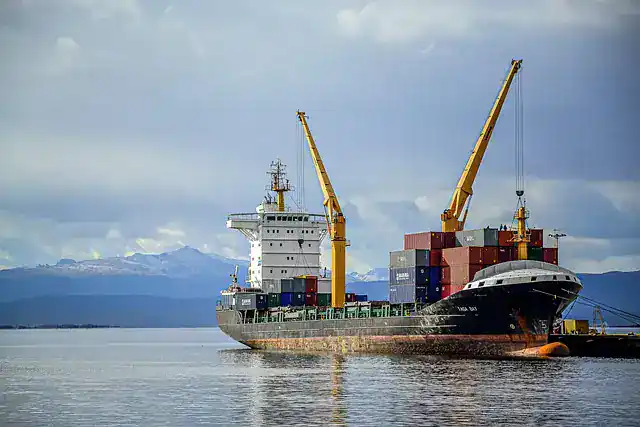
Common Challenges in Importing from Czechia and How to Handle Them Efficiently
Importing from suppliers in Czechia to Israel is a profitable and smart process, but in practice, it is also complex.
It involves a long supply chain with regulatory steps, logistics coordination, international documentation, insurance, taxation, and more.
As with any cross-border operation, challenges can arise, and if not managed properly, they can turn into costly obstacles.
Communication with Suppliers: Language, Pace, and Style
Despite English being the common language in most cases, in the Czech Republic we encountered quite a few suppliers who speak only Czech – which makes communication difficult for those unfamiliar with the language.
In addition, there are mentality gaps that can lead to misunderstandings: slowness in decision-making, expectation of detailed documentation, tendency to stick to details, and maintaining high formality. Communication errors can result in incorrect goods, delays, or defective pricing.
How to cope:
- Document all agreements in writing.
- Detailed contracts in advance.
- Preference for email communication and not just messages.
- Use of professionals who are familiar with the local market.
Shipping or Unloading Delays
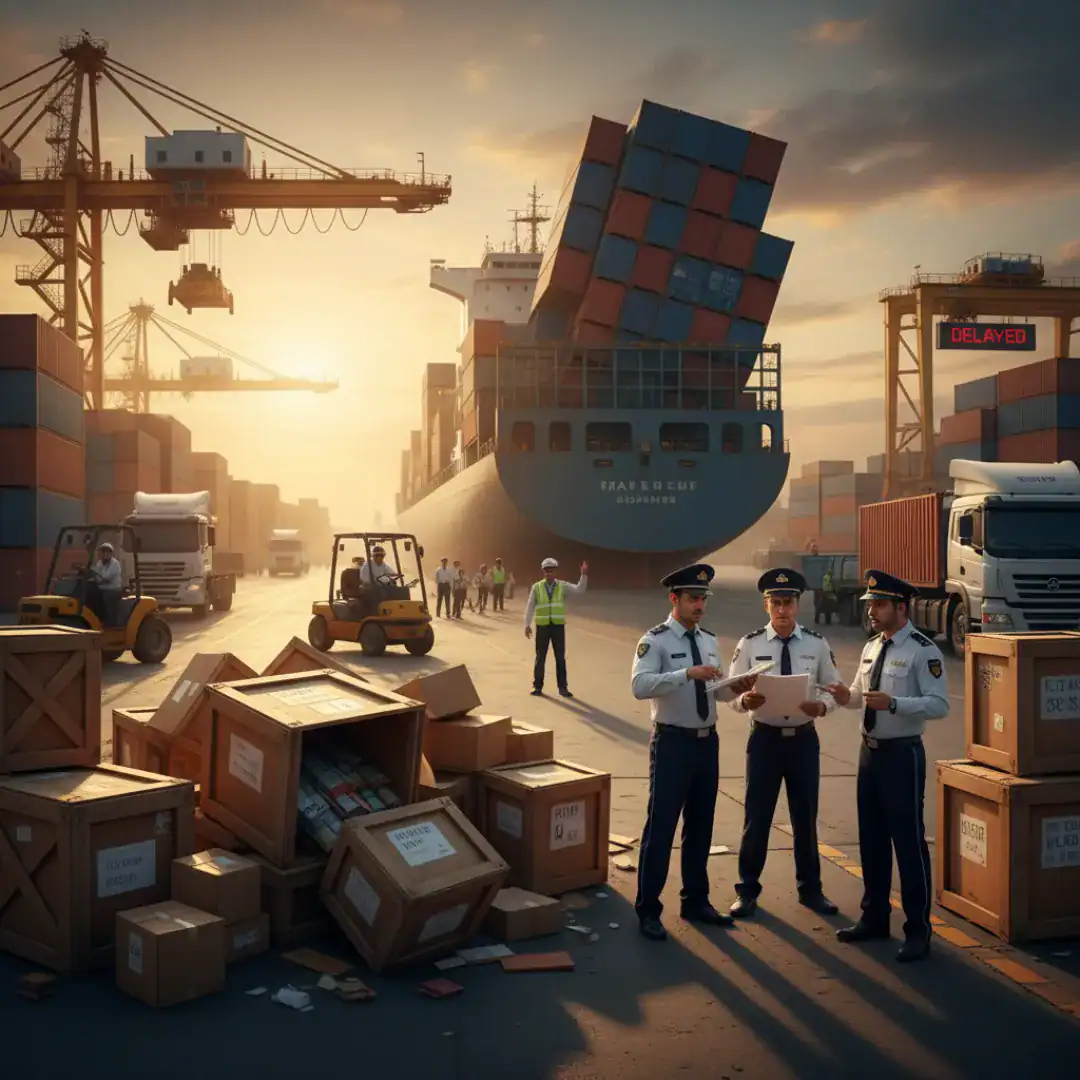
Even if the process is closed and defined – delays happen. Port congestion, issues with bills of lading, weather, or strikes – all these can delay arrival. A delay of only a few days can lead to high storage costs, penalties with customers, and damage to trust.
How to cope:
- Ensure a clear SLA (Service Level Agreement) with the service providers.
- Online tracking of cargo status.
- Ensure all documents are sent in advance.
- Insure the shipment, including coverage for delays.
Regulation and Standardization Requirements in Israel
A product approved for marketing in Europe does not necessarily meet the Israeli standard. Fields such as electricity, toys, supplements, food products, and cosmetics are subject to unique regulation in Israel – and sometimes require approvals from authorized bodies, such as the Standards Institution or the Ministry of Health.
How to cope:
- Check the customs classification in advance.
- Consult with a certified customs agent for an opinion.
- Check the possibility for pre-registration or exemption from inspection.
- Do not place an order before all conditions are clear.
Damage to goods or partial loss
Even when working with serious suppliers, damage can occur during transport.
Moisture, bumps, careless handling – and the damage can be expensive. Insurance doesn’t always cover everything, and processing a claim can take weeks.
How to cope:
- Comprehensive marine transportation insurance.
- Photographic documentation of the unloading.
- Immediate reporting in the event of a defect.
- Check the insurance conditions in depth before leaving.
Summary: Want to import from the Czech Republic, but don’t have time to deal with everything else?
Many businesses understand the benefits of importing from the Czech Republic: European quality, reliable suppliers, affordable pricing, and clear regulation.
But alongside the opportunity, there is also reality. And most business owners don’t have the time or resources to handle it themselves .
There is no time to check the classifications, read contracts in English, make sure the bill was prepared correctly, call the Standards Institute, inquire with customs, or chase a driver stuck with a container in Ashdod.
All of this takes hours – at the expense of time that you could invest in running your business, focusing on product marketing, and of course, sales.
And this is where we come into the picture – as a professional body specializing in the field.
Our role is not only to advise, but mainly to manage everything.
From finding suppliers for you, through coordinating shipping, handling documents, working with the authorities in Israel – until the goods are with you.
No surprises. No headaches. No wasting unnecessary energy.