
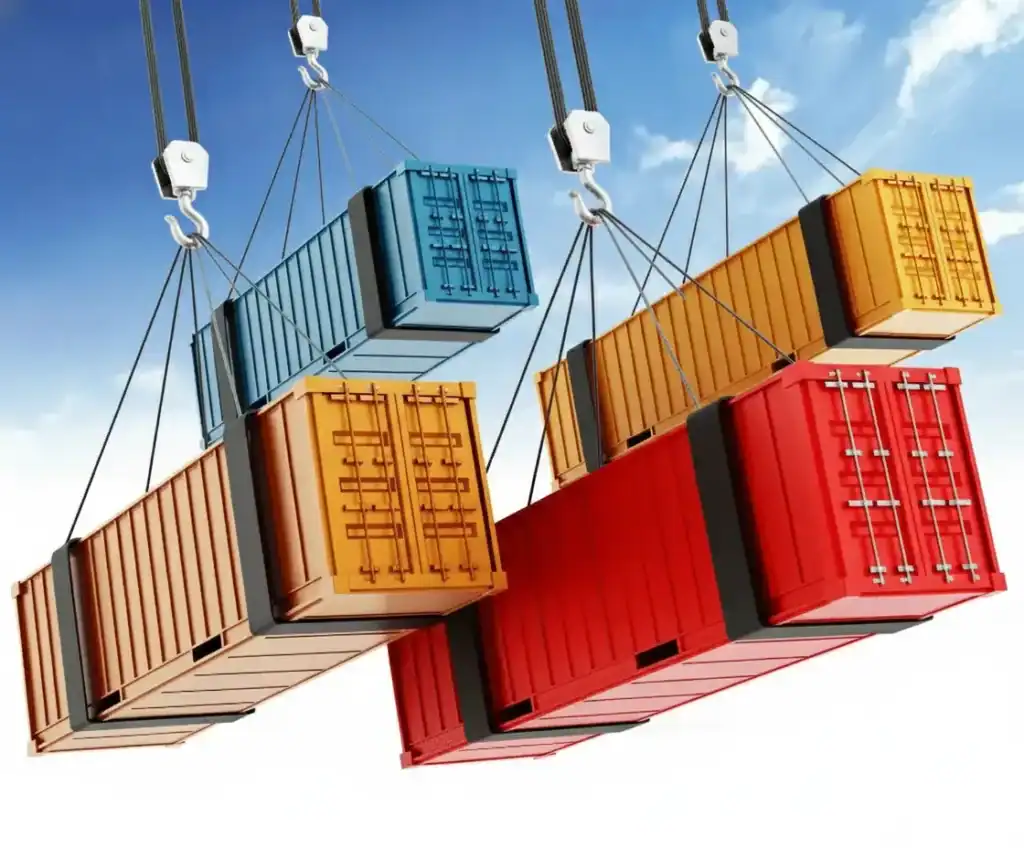
They transport millions of tons of goods every year, enabling secure storage, protection, and transportation by sea, land, and even air.
The use of standardized dimensions, types, and volumes has made global logistics far more efficient and precise. Yet beyond this uniformity lies a vast variety of containers – differing in size, purpose, and structure – each designed for specific types of cargo and operational needs. Choosing the wrong container type can lead to cargo damage, unexpected costs, or even shipment refusals.
In this article, we’ll explore the main types of shipping containers, their internationally standardized dimensions, and how they fit into the global shipping system – including a clear explanation of the TEU (Twenty-foot Equivalent Unit) and how it’s used to measure the capacity of ports and vessels.
Common Types of Containers
The most common type of container is the Dry Container, used for transporting general cargo that doesn’t require refrigeration or special handling. These containers form the backbone of international shipping and are available in two standard sizes: 20 feet (TEU) and 40 feet (FEU).
In addition, there are High Cube containers, which offer extra internal height for particularly tall cargo.
Beyond dry containers, there are specialized types: Reefer containers for refrigerated goods, Open Top containers for oversized cargo, Flat Rack containers for heavy or irregularly shaped items, and Tank containers for transporting liquids – each designed for specific types of cargo, from sensitive materials to heavy equipment and hazardous liquids.
The following table provides a comparison of the main container types:
| Container Type | Main Use | Key Advantages | Possible Drawbacks |
|---|---|---|---|
| Dry Container | General cargo, cartons, packaged goods | Widely available, low cost | Not suitable for sensitive cargo |
| Reefer Container | Food, pharmaceuticals, sensitive chemicals | Temperature control, preserves freshness | High energy consumption, higher cost |
| High Cube | Tall cargo, large volume | Extra internal height, space-saving for imports | Not always necessary; can increase shipping cost |
| Open Top | Oversized equipment, machinery | Top access with crane, flexible loading | Exposure to moisture, requires special cover |
| Flat Rack | Wide or oversized cargo | Full access from all sides, ideal for special loads | No cargo protection, requires secure lashing |
| Tank Container | Liquids, fuels, hazardous materials | High safety, specialized standard | Limited use, strict regulation |
What Is a TEU and Why Is It Important?
The term TEU – short for Twenty-foot Equivalent Unit – represents a standard 20-foot container and serves as a universal unit for measuring international shipping volume.
Every ship, seaport, or logistics terminal reports its capacity and cargo movement in terms of how many TEUs it can handle over a given period. For example, the Port of Haifa reports handling around one million TEUs annually, while total TEU traffic in Israel reached approximately 2.95 million in 2022. Modern container ships can carry over 20,000 TEUs on a single voyage.
Using TEUs allows for an objective comparison between ports, countries, and logistics service providers. It also affects shipping costs, as carriers calculate how many TEUs the cargo occupies, not just its actual weight.
For instance:
A 40-foot container (FEU) is equivalent to 2 TEUs, while a High Cube or Reefer container may count as more than 2 TEUs if it consumes additional resources (such as extra height or refrigeration).
For importers, understanding this terminology is crucial. Whether evaluating quotes, analyzing cargo movement, or planning operations, the ability to translate cargo volume into TEUs provides a significant planning and financial advantage.
Matching the Container to the Type of Cargo
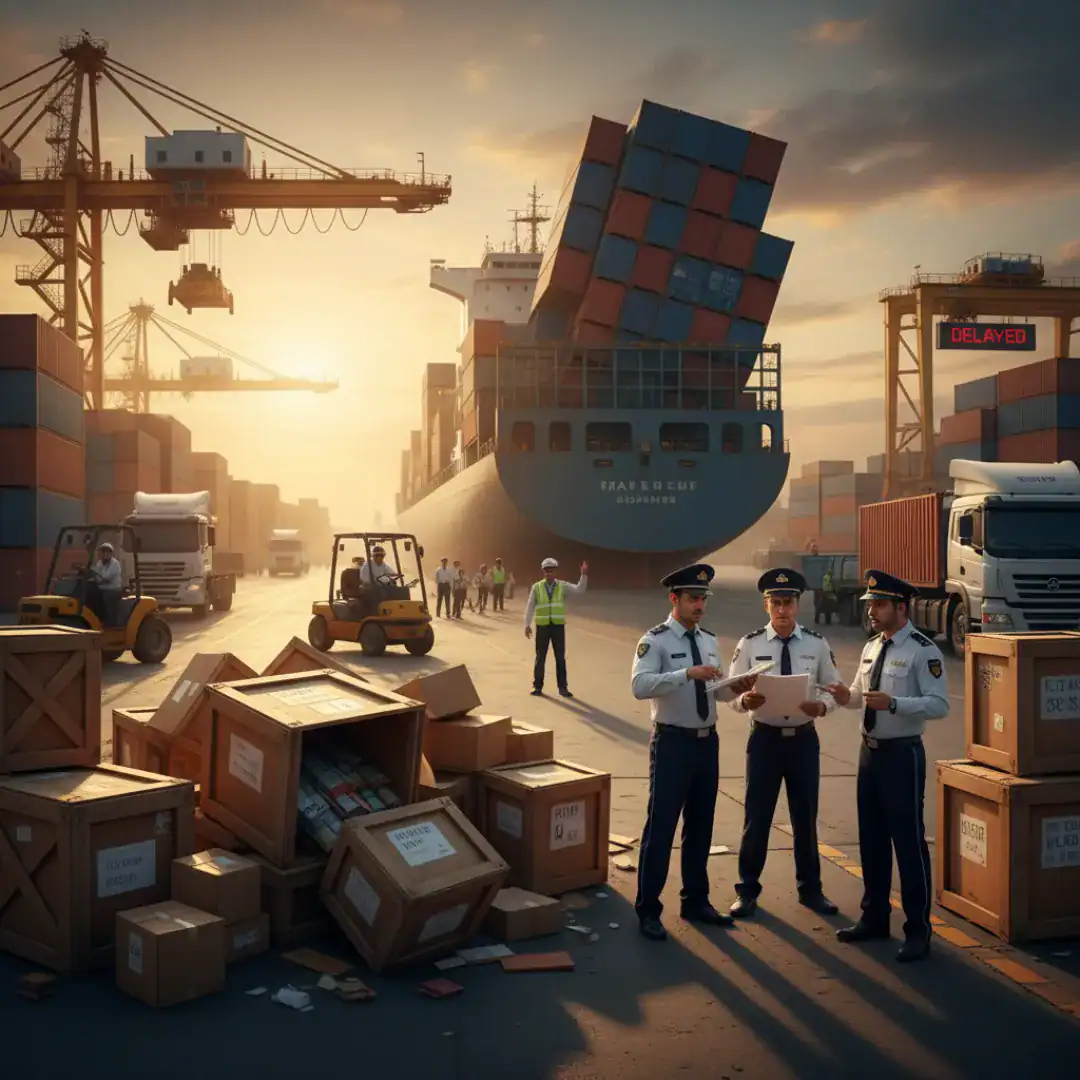
Choosing the right container starts with understanding the nature of your cargo: is it general merchandise, sensitive equipment, oversized freight, or a product requiring special conditions such as refrigeration? Each type of cargo has a container designed for it, and using the wrong container can lead not only to unnecessary costs but also to physical damage to the cargo or customs delays.
For example, cargo that requires a stable temperature must be shipped in a Reefer container, even if it could technically fit into a dry container. Heavy or oversized equipment may require a Flat Rack container, even at a higher operational cost.
Other important considerations include:
- Is the cargo stackable?
- Are there special safety requirements, such as hazardous materials?
- What is the final destination, and are there restrictions on special containers entering that port?
Early planning and consultation with a shipping agent can save thousands of dollars and prevent critical errors in container selection.
Container Dimensions and Standards According to ISO 6346
The international standard ISO 6346 defines the dimensions, capacities, and coding of shipping containers to enable global coordination between ports, carriers, customs agents, and suppliers. The standard ensures that containers are compatible with transport vehicles, cranes, rail systems, and securing devices – regardless of the country or shipping company.
Here is a breakdown of the main container types according to the standard:
- 20FT General Container: Internal volume – 33 m³, maximum payload – 21,700 kg
- 20FT High Cube Container: Internal volume – 37 m³, maximum payload – 21,700 kg
- 40FT General Container: Internal volume – 66 m³, maximum payload – 26,500 kg
- 40FT High Cube Container: Internal volume – 76 m³, maximum payload – 26,500 kg
- 20FT Reefer Container: Internal volume – 27 m³, maximum payload – 21,700 kg
- 40FT Reefer Container: Internal volume – 58 m³, maximum payload – 25,000 kg
- 20FT Open Top Container: Internal volume – 32 m³, maximum payload – 21,700 kg
- 40FT Open Top Container: Internal volume – 66 m³, maximum payload – 26,500 kg
- 20FT Flat Rack Container: Internal volume – 30 m³, maximum payload – 23,500 kg
- 40FT Flat Rack Container: Internal volume – 63 m³, maximum payload – 39,000 kg
- 20FT Tank Container: Internal volume – 26 m³, maximum payload – 30,480 kg
Understanding precise container dimensions and capacities allows for accurate shipping planning, prevents operational errors or overloads, and ensures optimal use of cargo space. In cases where standard containers are insufficient, customized special containers can be used to meet specific requirements.
In Summary
Containers are much more than storage units – they are the heart of the international shipping industry. Each type of container has a specific purpose, structure, and capability, and choosing the right one can directly impact costs, schedules, and cargo safety.
Familiarity with terms like TEU, the ISO 6346 standard, and the distinction between standard and specialized containers gives importers a significant operational and commercial advantage in a competitive market.
Whether shipping food, industrial equipment, machinery, or raw materials, selecting the appropriate container for the cargo ensures it is transported safely, efficiently, and cost-effectively. Advance planning, collaboration with a professional shipping agent, and understanding the available options are key to successful shipping.
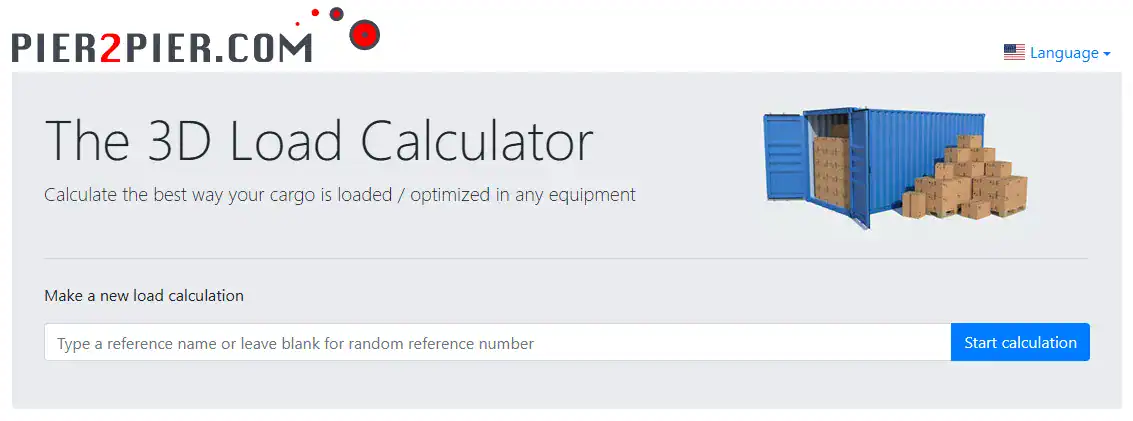
Want to Simulate Loading Your Container?