

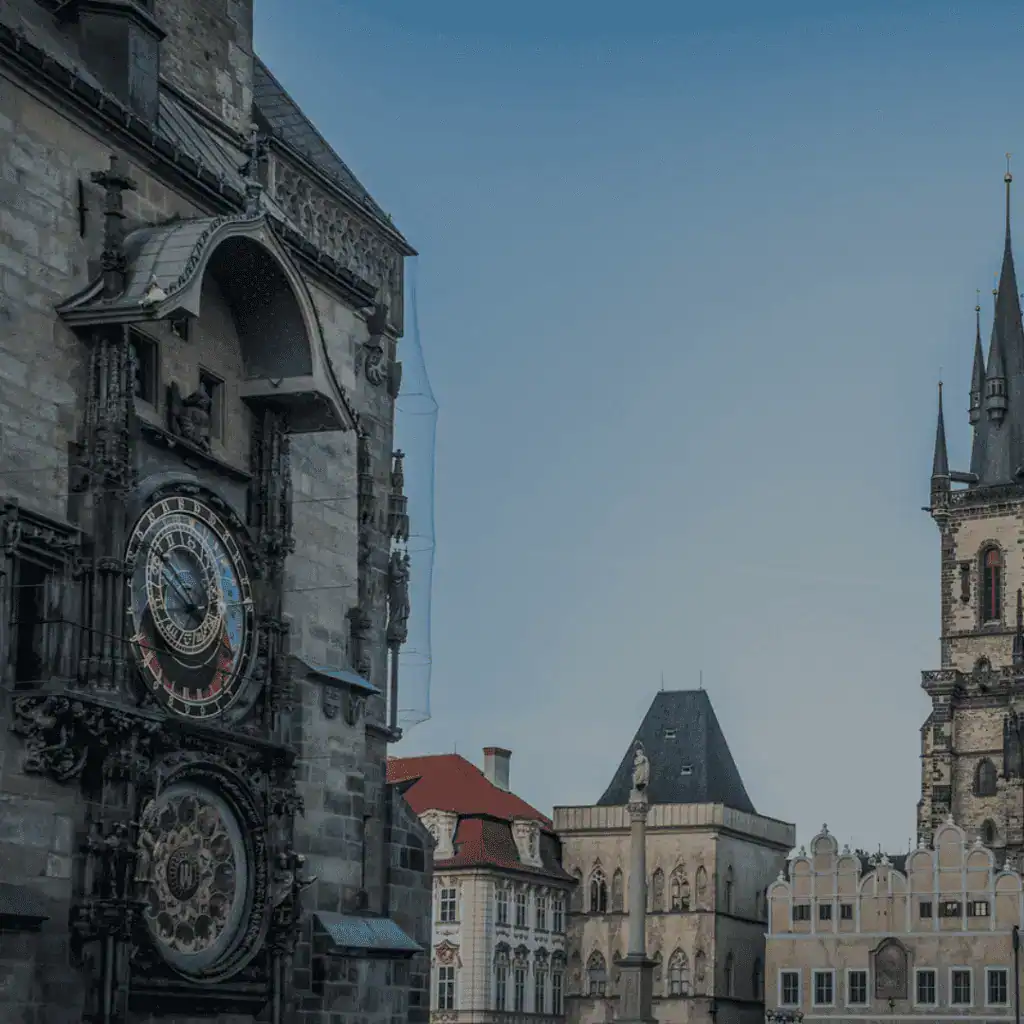
When you wander through the ancient streets of Prague and arrive at the Old Town Square, it’s impossible to miss the impressive Astronomical Clock. It’s one of the city’s most iconic landmarks, drawing millions of visitors every year.
But behind its beauty lies a dark and mysterious legend that has fascinated historians and travelers for centuries.
Who Built the Prague Astronomical Clock?
Historical records show that the Prague Astronomical Clock- known locally as Pražský orloj– was installed in 1410 by clockmaker Mikuláš of Kadaň and astronomer Jan Šindel, a professor at Charles University.
However, popular legend attributes its creation to a man named Master Hanuš (Jan Růže), sometimes mistakenly identified as Jan Hus. Over time, the two stories merged, creating confusion between documented history and folklore.
The Terrible Conspiracy Against the Creator
According to the medieval legend, the Prague city council feared that Master Hanuš might build another astronomical clock in a rival city, stealing Prague’s glory.
To prevent this, they plotted a cruel act- they blinded him with a hot iron rod, ensuring he could never recreate his masterpiece.
The story continues that, in revenge, Hanuš damaged the clock’s mechanism before his death, leaving it broken for decades until another craftsman restored it.
Is the Legend True?
While no historical evidence supports the tale of Master Hanuš’s blinding, the legend has become inseparable from the clock’s identity.
Historians agree that Mikuláš of Kadaň was the true builder, assisted by Jan Šindel, who designed the astronomical functions.
Still, the legend symbolizes how much pride the people of Prague have always felt for their city’s ingenuity and craftsmanship.
Damage During World War II
In May 1945, during the final days of World War II and the Prague Uprising, the Old Town Hall and its clock suffered devastating damage from German artillery fire.
The wooden statues and calendar dial were destroyed in flames, and the mechanism stopped working completely.
After extensive restoration led by Czech experts, the clock was fully repaired by 1948 and resumed operation, symbolizing resilience and rebirth in postwar Prague.
A Living Piece of History
Today, the Astronomical Clock continues to tick proudly in the heart of Prague, marking time just as it did more than six centuries ago.
Every hour, crowds gather to watch the parade of the Twelve Apostles and the symbolic figures of Vanity, Death, Greed, and Lust.
It’s not just a mechanical wonder- it’s a story of art, legend, and endurance that captures the soul of Prague itself.
Conclusion
The Prague Astronomical Clock stands as one of the oldest and most complex timepieces in the world.
Whether you believe the legend of Master Hanuš or prefer the verified history of Mikuláš of Kadaň, there’s no denying its timeless charm.
Restored after war, admired by millions, and still running after more than 600 years- the clock remains a living testament to Czech craftsmanship, creativity, and mystery.