

In the world of logistics, there are three main types of international shipping: air, land, and sea.
Each method differs in cost, transit time, and the type of cargo it can transport.
In this article, we’ll focus on sea freight-the most common and cost-effective way to move large volumes of commercial goods between countries.
Sea freight is carried out using massive container ships that operate on fixed routes between major ports around the globe.
But how long does it really take for your cargo to reach Israel? And why is there no single, clear answer?
How Is Sea Freight Volume Measured?
One of the key terms in the shipping industry is TEU, short for Twenty-foot Equivalent Unit.
This is a standard unit of measurement representing a 20-foot-long container. For example:
- A 40-foot container equals 2 TEU.
- Modern cargo ships can carry anywhere from 10,000 to 24,000 TEU.
- A major port like Shanghai handles more than 50 million TEU per year.
The greater a port’s or vessel’s TEU capacity, the higher the availability of direct routes, frequency of sailings, and the more efficient and coordinated the logistics network becomes.
However, as these systems grow larger and more complex, the likelihood of delays or operational disruptions also increases.
What Does the Sea Freight Process Actually Involve?
The process doesn’t start at the port-it begins much earlier.
It includes several critical stages:
- Booking space with the shipping line – ideally several weeks in advance to secure availability on your preferred date.
- Land transport from the supplier’s location to the port of origin.
- Operational handling at the port – unloading, weighing, and inspection procedures.
- Loading the container onto the ship according to the scheduled departure.
- The voyage itself – with or without intermediate stops at other ports.
- Unloading at the destination port – including crane coordination, cargo release, and customs clearance.
- Land transport to the warehouse or final customer.
Each of these steps can be delayed for a variety of reasons-meaning that “shipping time” is never a fixed or absolute number
Average Sailing Times from Major Ports to Ashdod
The following table presents the average sailing times from major global ports to Ashdod Port.
It must be emphasized that shipping times often change due to various factors, as explained below.
Sailing times vary according to: congestion, seasonality, sea conditions, port disruptions, changing regulations, and even policy decisions (for example, Trump’s 2025 decision to address the U.S. trade balance).
Therefore, the data presented here is for illustration only and does not constitute a commitment to the actual shipping time:
| Port of Origin | Destination Port | Average Sailing Time (Days) |
|---|---|---|
| Yangshan Guangdong, China | Ashdod | 44 |
| PSA Singapore, Singapore | Ashdod | 45 |
| Ningbo Meishan, China | Ashdod | 46 |
| Qingdao Qianwan, China | Ashdod | 49 |
| Busan, South Korea | Ashdod | 49 |
| Jebel Ali, United Arab Emirates | Ashdod | 24 |
| Port Klang, Malaysia | Ashdod | 45 |
| Rotterdam, Netherlands | Ashdod | 17 |
| Hong Kong | Ashdod | 50 |
| Antwerp, Belgium | Ashdod | 13 |
| Tanjung Pelepas, Malaysia | Ashdod | 37 |
| Port of Los Angeles, USA | Ashdod | 76 |
| Long Beach, California, USA | Ashdod | 49 |
| Laem Chabang, Thailand | Ashdod | 47 |
| Luka Koper, Slovenia | Ashdod | 9 |
Why Do Sailing Times Vary?
It’s easy to assume that sea freight operates on a stable, predictable schedule-but in reality, it’s influenced by a wide range of factors:
- Availability of vessels and direct shipping routes
- Intermediate stops and coordination between ports
- Heavy port congestion, especially during holidays and year-end peak seasons
- Sea conditions, such as high waves or storms along transit routes
- Customs clearance delays or changing regulations
- Shortages of containers or available cranes
- Geopolitical events – for example, the Houthi attacks on ships and Red Sea trade disruptions during 2024-2025, which forced many vessels to bypass the Suez Canal, adding several weeks to the usual route from the Middle East to Europe.
Each of these factors can significantly alter what might seem like a straightforward shipping schedule-turning it into a complex operational challenge.
Summary
If you’re importing goods to Israel, it’s essential to understand that shipping times are not fixed-they’re dynamic and influenced by a wide range of factors.
By understanding the shipping process, using key terms like TEU correctly, and analyzing the ports most relevant to your operations, you can make more informed decisions, plan with greater accuracy, and significantly reduce unexpected delays along the way.
Recommended Websites for Tracking Sea Freight Transit Times
To get an accurate and up-to-date picture of sailing times between ports, several advanced online tools can help.
These platforms provide real-time tracking, route modeling, and transit-time estimation, allowing importers to better predict arrival times, identify available shipping lines, and check which ports are currently congested or what routes vessels are taking.
Here are three trusted websites we recommend based on hands-on experience-both for their reliability and ease of use:
1. SeaRates – A popular platform powered by DHL, offering a Transit Time Calculator, optimal route finder, and real-time data on shipping durations between any two ports worldwide.
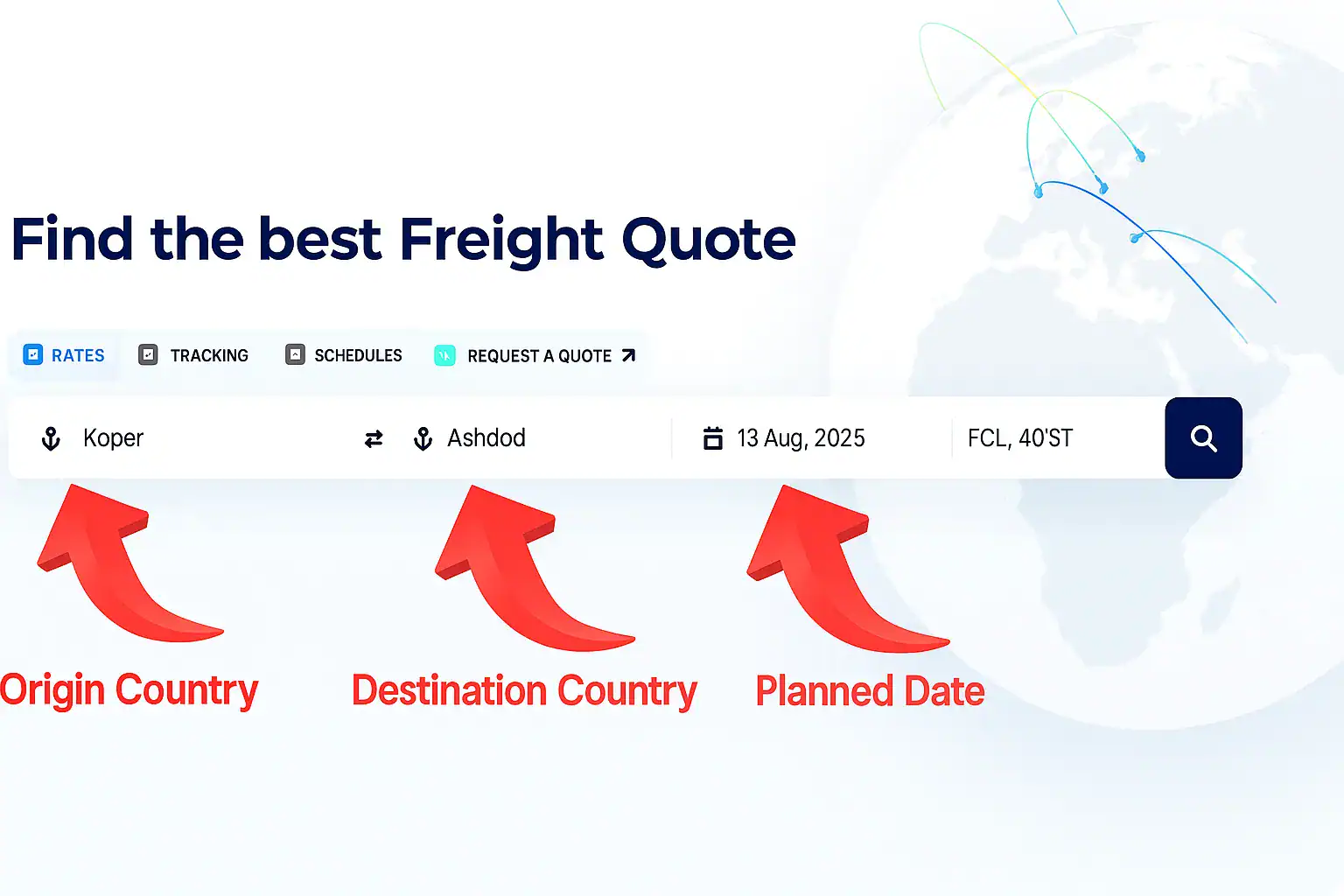
Since the website provides information not only on sea routes but also on air and land transport, pay attention to the right-hand panel on the screen.
In that section, you can select from the various sea freight options, including:
- Full Container Load (FCL)
- Less than Container Load (LCL)
- Bulk shipments
In addition, you can also choose from the following transport modes:
- Air freight (Air)
- Road transport – whether it’s a Full Truck Load (FTL), container transport, or a Partial Truck Load (LTL)
- Rail freight (Rail)
- And even submarine shipping… (well, not really-maybe one day!)
After clicking the search icon, you’ll reach the next screen.
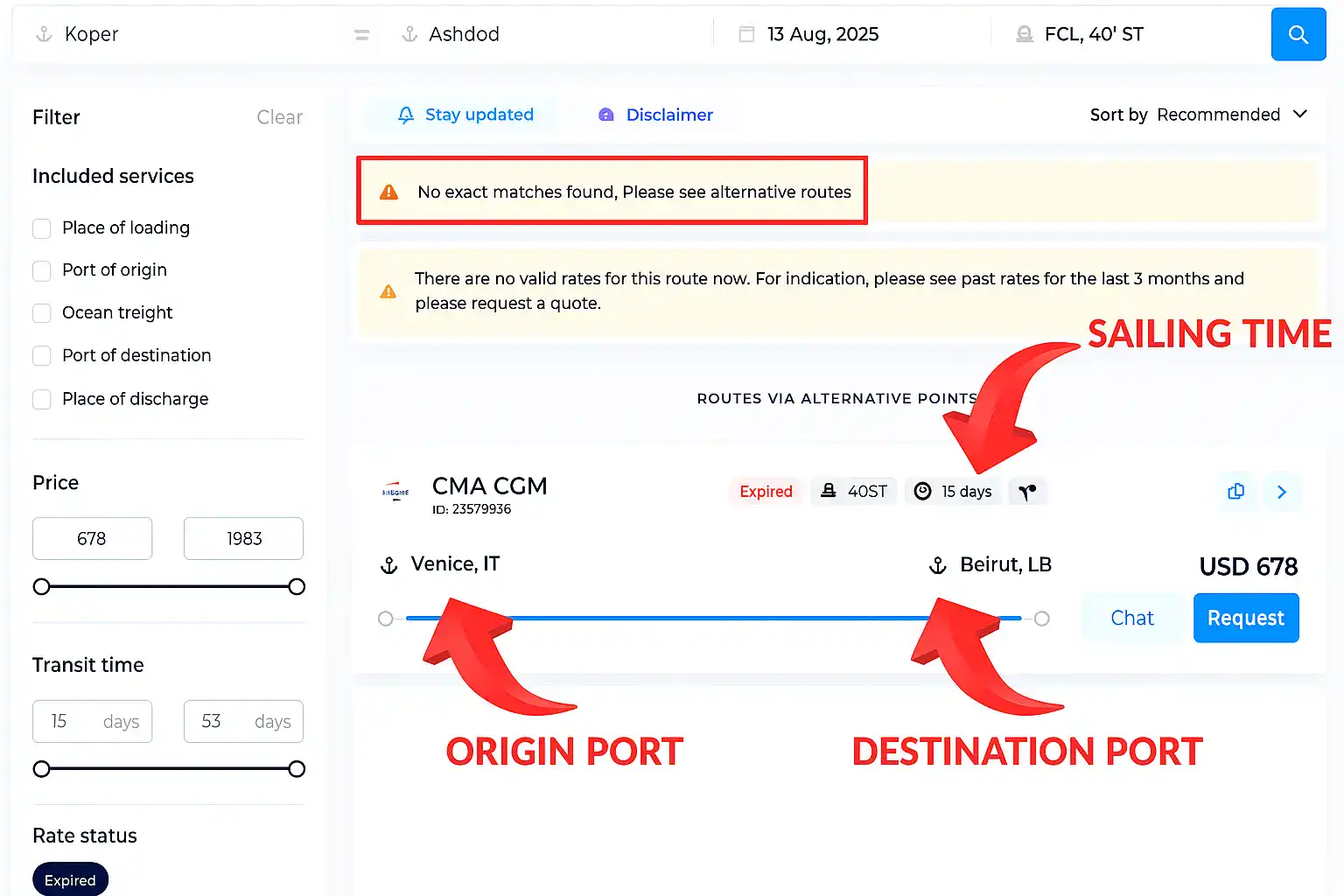
Here, you can see that no direct routes were found between the selected ports on the chosen date-but an alternative route is suggested (highlighted in red).
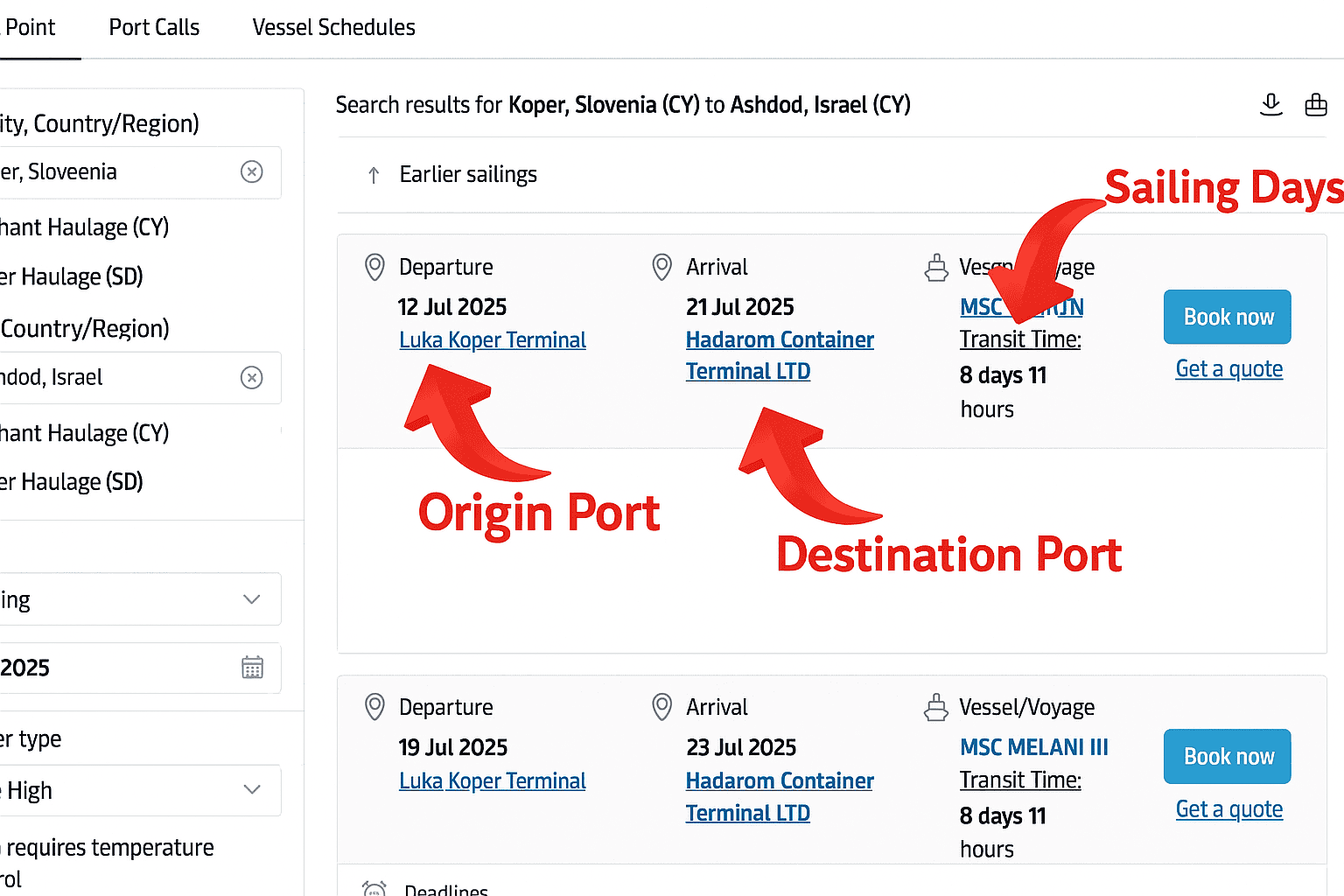
2. Maersk – An official tool from the global shipping giant Maersk, allowing users to perform a customized search for sailing times between any two ports worldwide.
You can enter your port of origin, destination port, and preferred dates, and the system will display active routes, departure and arrival dates, vessel names, and sometimes even stopover durations at intermediate ports.
The biggest advantage of this tool lies in its accuracy and reliability, as the data is drawn directly from Maersk’s own operational systems.
In addition, you can see which routes are currently open for booking and which are available for tracking only.
This tool is especially useful for importers who want to cross-check data or plan their shipments through Maersk’s routes or partner networks.