

The logistics world is full of small details that can make a big difference.
A shipment arriving a day late, a customs document released behind schedule, or a driver who fails to show up on time – these might seem like small issues, but for a business that depends on strict delivery schedules, they can result in significant financial losses.
To prevent such situations and ensure every supply chain partner meets their commitments, there’s one simple, effective tool:
the Service Level Agreement (SLA).
What Is SLA?
An SLA, or Service Level Agreement, is a written document (or a clause within a contract) that clearly and legally defines what is expected to happen, when it should happen, and how compliance will be measured.
The goal: to eliminate ambiguity, set clear expectations, and establish a consistent foundation for monitoring and accountability.
In the context of importing, an SLA may include:
- Response time to questions or requests – for example, replies within 24 hours.
- Commitment to complete customs clearance within a set timeframe- e.g., up to three business days from receipt of documents.
- Guaranteed delivery to the customer within 48 hours after the goods arrive at the port.
- Real-time cargo tracking and status updates.
- Predefined compensation terms in case of delays, losses, or missed deadlines.
An SLA isn’t “extra bureaucracy”- it’s the opposite. It creates clarity, accountability, and predictability.
Why an SLA Is Essential in the Import Supply Chain?
1. Clear Expectations – No More “I Didn’t Know”
The import supply chain involves dozens of players, handovers, and transition points – and even a minor delay can turn into a major financial loss.
Without an SLA, everyone interprets their responsibilities and timelines differently. What counts as a quick response? What does “fast customs clearance” really mean – a day, three days, or a week?
With an SLA in place, there’s no room for guesswork.
Every clause has a defined timeframe, a measurable target, and a clear outcome.
For example, “Customs clearance within three business days” is a concrete commitment – not a suggestion.
2. Measure, Track, and Enforce
Professional import management is driven by data, not assumptions.
An SLA lets you accurately measure whether suppliers meet their commitments:
Did the shipping company provide timely updates? Did the customs broker act efficiently? Did the goods reach the warehouse on schedule?
Once you have metrics, you can identify long-term trends, spot bottlenecks, and push for improvement.
If, for instance, 80% of shipments miss the unloading schedule, you now have facts – not just complaints.
3. A Clear Basis for Compensation
It’s nearly impossible to claim compensation for delays if “delay” was never defined.
But when the SLA states that any delay exceeding 72 hours results in a 5% credit – it becomes part of the agreement.
That clause protects your business while motivating suppliers to maintain high service standards.
4. Driving Continuous Improvement
Experienced partners understand that an SLA isn’t a punishment – it’s a tool for improvement.
Measurable commitments create accountability and drive efficiency.
They encourage better coordination, process optimization, and proactive problem-solving.
Suppliers can’t simply vanish once the contract is signed – they’re continuously evaluated and expected to uphold a consistent standard.
Where is SLA Most Important in Import Processes?
An SLA becomes crucial at every stage where operational handoffs occur – when one party must deliver, coordinate, release, or transfer responsibility to another.
In other words, these are the points where things most often “fall through the cracks.”
Below are the key stages in the import chain where an SLA moves from being a mere operational formality to a true tool of control and accountability:
With the Shipping Company
This is where the entire logistics process begins and ends.
An SLA ensures that shipments don’t just depart, but depart on schedule, arrive as planned, and are accompanied by the required documentation.
What to include:
- Pickup times: e.g., within 48 hours of order confirmation.
- Average transit time: clearly define the ETA (Estimated Time of Arrival).
- Real-time tracking: updates on shipment status at agreed intervals (e.g., every 24 hours).
- Customer service availability: guaranteed response times – e.g., within 6, 12, or 24 hours.
With the Customs Broker
The customs broker is the gateway to your goods – they can either speed up or delay release.
An SLA ensures proactive, timely handling of all documentation and approvals.
What to include:
- Customs clearance timeframe: e.g., completion within 2-3 business days after all documents are submitted.
- Regulatory coordination: obligation to proactively liaise with standards institutes, the Ministry of Health, or other authorities.
- Response time: fixed reply deadlines for all inquiries, even during peak periods.
With the Logistics Warehouse
Once goods arrive, they must be unloaded, organized, entered into the system, and sometimes dispatched onward.
An SLA ensures the warehouse operates according to your schedule – not its own.
What to include:
- Unloading timeframe: e.g., within 4 hours or by end of business day.
- Organization standards: by category, temperature, or packaging, according to set procedures.
- Receiving reports: full report submitted within a defined number of hours after unloading.
- Order fulfillment: clear deadlines for pick-and-pack or dispatch operations.
Ultimately, any point in the import chain where one party relies on another introduces potential for delay or miscommunication.
A clear, specific SLA transforms that risk into structure – creating a supply chain that’s predictable, coordinated, and efficient.
What Does an Effective SLA Look Like?
A strong SLA should include the following key elements:
- Measurable objectives – such as response times, delivery deadlines, and handling procedures.
- Clear responsibilities – defining exactly who is accountable for each task.
- KPI tracking – to monitor performance and trends over time.
- Enforcement mechanism – including predefined penalties or compensation for non-compliance.
- Review and update period – specifying when the agreement will be revisited and revised.
An SLA doesn’t need to be a lengthy legal document – sometimes a single, clearly written and mutually signed page is all it takes to create accountability and clarity.
Types of SLA – Which One Fits Your Business?
Not all SLAs are created equal.
There are three main types, each designed for a different kind of business relationship:
- Customer-Based SLA – tailored to a specific client and covering all the services they receive.
Example: A large retail chain may sign an SLA with a shipping company that specifies exact delivery times, inventory handling procedures, and communication standards customized to its needs.
- Service-Based SLA – focuses on one specific service, applied under the same conditions to all clients.
Example: A logistics provider offering standardized pickup and delivery with a 99% on-time commitment for every customer.
- Multi-Level SLA – a layered agreement that adjusts terms according to service tiers or customer categories.
Example: Standard shipping within five days, premium within two, and express next-day delivery – each with distinct commitments and pricing.
Selecting the right SLA type depends on your company’s size, the complexity of your operations, and how much control you want to maintain across the supply chain.
Do You Need an SLA Even When There’s Trust?
Even in relationships built on trust, an SLA helps preserve that trust.
It’s not about suspicion or control – it’s about agreeing in advance on what truly matters, so there are no surprises later on.
Even the strongest partnerships face challenges:
Someone forgets to send an update, a driver is delayed, a document gets stuck – and suddenly, a misunderstanding turns into a dispute.
Without an SLA, everyone interprets responsibilities differently.
With an SLA, everything is clearly defined – when shipments should arrive, when responses are due, and what happens if timelines aren’t met.
And it’s not just for the client’s protection – suppliers benefit too.
They know exactly what’s expected, when it’s due, and how performance will be evaluated.
That means assessments are based on facts, not opinions.
Think of an SLA as a small insurance policy for your business relationship – a clear, simple document that ensures both sides know exactly what to expect.
Ultimately, what defines a strong partnership isn’t how things go when everything runs smoothly – it’s how both sides handle challenges when they arise.
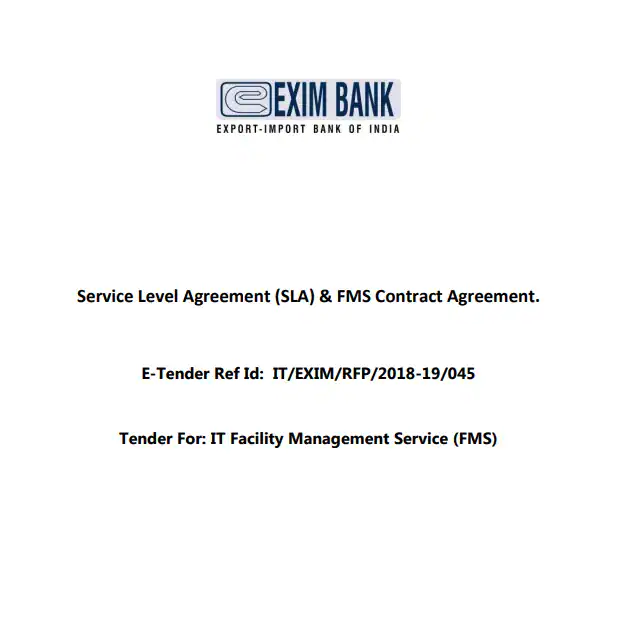
Here is an example of an SLA agreement.