
What Is a SPEC and Why Is It So Critical?
SPEC is short for Specification. Simply put, it’s the technical specification of the product.
It’s a structured, written, and clear document that defines exactly what the supplier is expected to produce for you.
A SPEC includes all technical details that can affect the final outcome: from the type of raw materials, exact dimensions, weight, colors, and finish, to functional requirements, quality inspections, and compliance with mandatory standards.
Why is it so important?
Without a SPEC, any agreement with the supplier remains informal.
If a product arrives even slightly different from what was expected, there is no official document to rely on.
On the other hand, when a SPEC is signed and agreed upon in advance, it becomes a technical anchor that protects you.
It allows you to prove what was agreed, and to request corrections, compensation, or even cancel the order if the supplier fails to meet expectations.
In other words, a SPEC is the difference between smart importing and a risky gamble.
What Does a Professional SPEC Include and How to Build It Correctly
A high-quality SPEC must include all details that can affect the product in practice. It leaves no room for interpretation or assumptions.
The more precise and comprehensive the specification, the lower the risk of unpleasant surprises.
Here are the key components every SPEC should include:
- Raw Materials: Types of materials, required standards, source of the material (if relevant), and thickness or weight as needed.
- Exact Dimensions: Length, width, height, diameter, and any other relevant measurements, including allowable tolerances.
- Colors and Finishes: Exact color codes (e.g., Pantone – the international standard for precise color identification), textures, polish, or special coatings.
- Product Functionality: Required functional features-water resistance, heat resistance, strength, flexibility, etc.
- Packaging and Logistics: Type of packaging, labeling, markings, instructions for use, quantity per unit, and shipping method.
- Required Tests: Quality checks during production, safety inspections, compliance with standards such as CE or RoHS, and, if needed, independent laboratory tests.
- Images and Drawings: Whenever possible, include renderings, technical drawings, and photos to clarify every detail.
Building a SPEC doesn’t have to be complicated, but it does require investment.
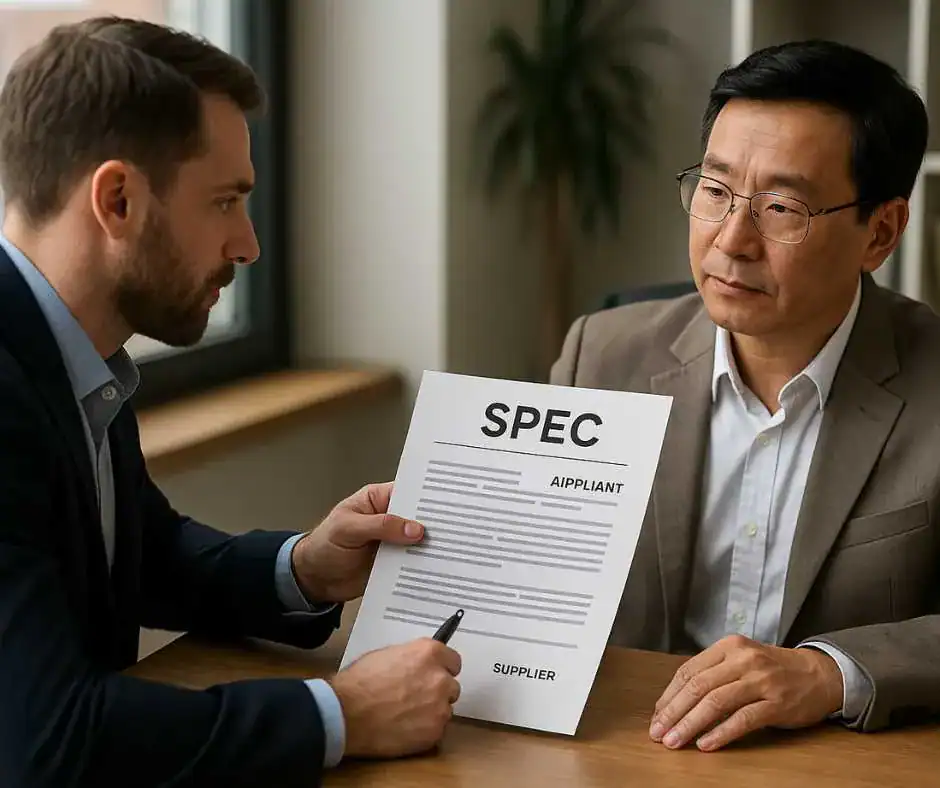
You should sit down with the supplier or manufacturer, understand the production process, and ensure everything is written in a way that leaves no ambiguity.
Important:
Any detail not explicitly written can become a problem. A good SPEC is like insurance-you’d rather pay for precision now than pay for mistakes later.
Why Do Suppliers Avoid SPEC and How to Handle It
Not every supplier jumps at the chance to sign a detailed SPEC document.
Many prefer to leave things “open,” communicate verbally, or rely on informal correspondence.
Why?
Because a SPEC holds them accountable.
Once they sign it, they are committed to every single detail, knowing that any deviation could be costly. Some suppliers may try to argue that it’s “not necessary,” “everyone does it this way,” or “it’s better to stay flexible.” It’s important to understand: flexibility is no substitute for clarity. Any ambiguity will always work in the supplier’s favor-and to the importer’s detriment.
How to Handle This
- Stand firm: Do not compromise on the SPEC. If a supplier refuses to sign, consider it a red flag.
- Explain the value: Present the SPEC as a mutual tool that protects both parties and prevents misunderstandings.
- Integrate it early: Introduce the SPEC during the proposal stage, not at the last minute. The earlier it becomes part of the process, the more naturally the supplier accepts it.
- Send a ready-made version: When you provide a professional, pre-prepared SPEC, suppliers take it seriously. It signals that you know what you’re doing.
The more the supplier sees that you can draft a precise SPEC, understand the requirements, and manage the process professionally, the lower the risk of errors-and the higher the mutual respect.
What Does a SPEC Look Like in Practice? Recommended Structure and Example
To fully understand what a high-quality SPEC document looks like, it’s important to be familiar with its structure.
Although there is no single mandatory template, most SPECs are organized, tabular documents that are clear and easy to read, composed of standard sections.
Recommended Structure:
| Component | Content |
|---|---|
| Title | “Specification – Product X” + version date |
| Party Details | Importer name, supplier name, contact information |
| General Product Description | Product name, catalog code, main use |
| Raw Materials | Types, standards, thickness, weight, source |
| Exact Dimensions | Length, width, height, diameter – including allowable tolerances |
| Colors and Finish | Pantone color codes, texture, coating, prints |
| Functional Requirements | Strength, durability, water resistance, functional standards |
| Packaging and Labeling | Type of packaging, labeling, usage instructions, required language |
| Tests and Inspections | Quality checks, safety standards, shipment testing |
| Appendices | Drawings, photos, samples |
Of course, the structure should be adapted to the type of product.
For example, a tech product may require specifications for electronic components, while a cosmetic product would need to list active ingredients and compliance with health regulations.
Important Note:
Always include signatures from both parties with a clear date. The SPEC can also be attached as an annex to the commercial agreement.
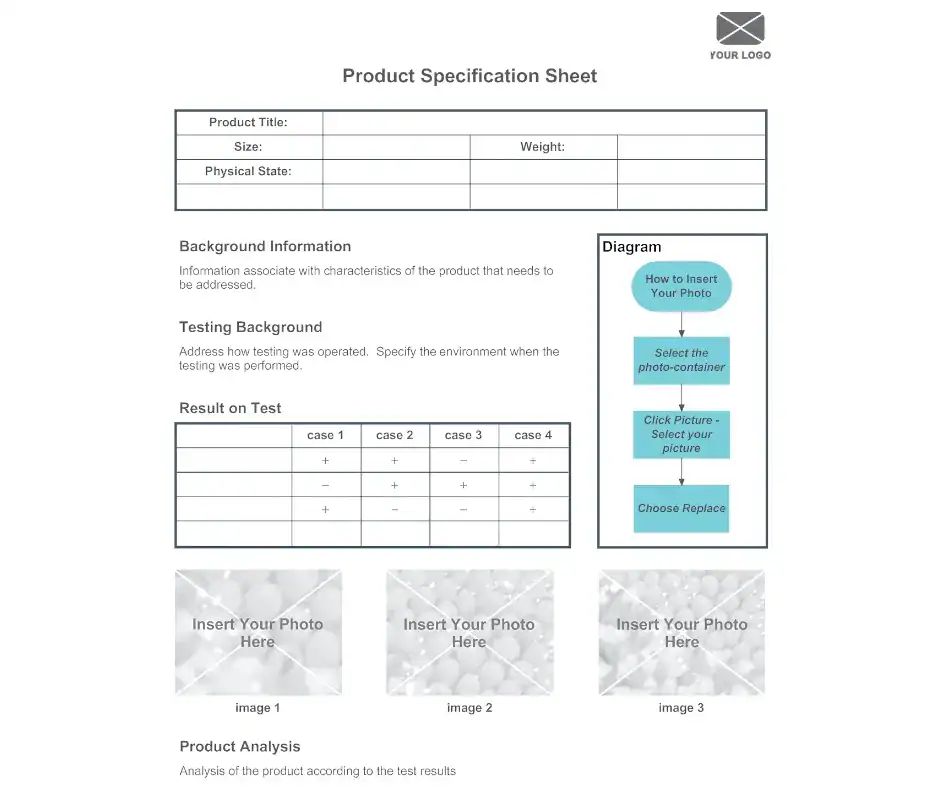
And this is one of many formats for the structure of a SPEC:
How to Ensure the Supplier Actually Complies with the SPEC
Drafting a SPEC is an important step, but it’s not enough. Even a detailed document is of little value if it’s not implemented in practice.
It’s essential to establish control mechanisms that verify the supplier meets the requirements throughout the production process.
Here are some common and effective methods:
- Pre-production Sample Inspection
Before mass production begins, request a complete sample to be checked against the SPEC. Only after the sample is approved should production start. - During Production Inspection (DPI)
Conduct on-site inspections in real time, usually by an external quality control company, to ensure the product being manufactured matches the agreed specifications. This is particularly important for complex projects or large-scale production. - Final Random Inspection (FRI)
Just before the container leaves the factory, a random inspection is performed according to international standards (e.g., AQL). Random items from the shipment are checked to ensure full compliance with the SPEC. - Use of a Professional Third-Party Inspector
Many companies offer inspection services according to strict standards. Third-party verification provides professional credibility to the checks and gives importers peace of mind. - Photo and Video Documentation of Production
Some importers require suppliers to send real-time photos or videos from the production and packaging line. This documentation helps prevent errors during the process.
The goal is clear:
Don’t rely on luck. Implementing the SPEC is the importer’s responsibility just as much as drafting it. Those who verify compliance benefit; those who ignore it pay the price.
In Summary
A SPEC is not just another technical document.
It is a critical tool that directly affects product quality, customer satisfaction, and business profitability.
Importing without a SPEC relies on general communication, hope, and assumptions. By contrast, a precise, well-structured, and signed SPEC creates a clear definition of expectations-giving you real control over the process.
Every mistake avoided in the planning stage saves money, time, and headaches later. That’s why, for every import transaction-regardless of the product or quantity-it’s always recommended to start with a SPEC.
And if you don’t know how to draft it yourself?
Consult a professional or an import advisor. It’s the most worthwhile investment you can make for smooth and secure importing.